



"I like it when people say, 'How did it last so long?' I say, 'It's still going."
Updated Mar 04, 2025Here’s How to Pull Off the Perfect Wedding Ceremony Music Program
Learn what types of songs should be in your lineup.

Photo: Photo By Julieta

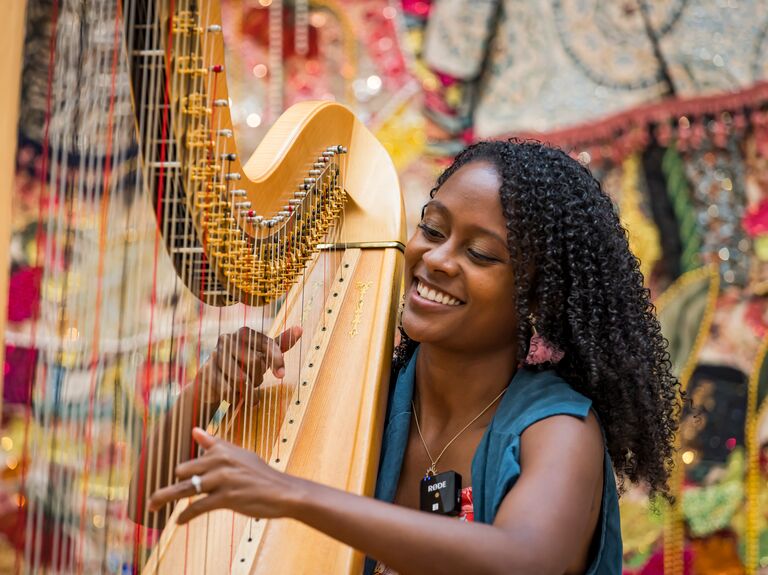
When you think about your wedding ceremony music, your first thought is probably your processional song. But consider the bigger picture: You're providing a musical backdrop to the most special part of the day, which really sets the tone for the entire event. Check out these fundamental tips and helpful ideas to find the right ceremony music for your wedding. Then, once you've read the wedding music ceremony guide below, click on the "Soloists & ensembles" category on The Knot Vendor Marketplace to check out musicians in your wedding location. Use handy filters, like "Music genres" and "Instruments," to uncover the folk-style harpist you've been looking for.
In this article: Do You Play Music During the Wedding Ceremony? | Wedding Ceremony Song Order | How to Plan Your Wedding Ceremony Music | Frequently Asked Questions
Do You Play Music During the Wedding Ceremony?
Yes, you do play music during some portions of the wedding ceremony. The main rule is don't play music while someone is speaking, especially if you want to hear them in your wedding video. If you're performing one or more rituals during your ceremony, such as lighting a unity candle, consider having your musicians play instrumental music during that time. Alternatively, a talented friend or family member could perform a song during a natural break in the ceremony in lieu of a reading.
Wondering: "Do you have to have music at a wedding ceremony?" Simply put, no. Music can help with awkward silences and let guests know to quiet down before the ceremony starts, but it's not a requirement. Feel free to have your officiant or close loved ones recite religious or poetry readings in place of music.
Wedding Ceremony Song Order

Design: Falak Khoja
Traditionally, wedding ceremony music programs involve a minimum of three types of songs: preludes, processionals and recessionals. Interludes and postludes can also be included in the order of songs for a wedding ceremony. Angelica Hairston, Atlanta- and Chattanooga-based harpist, and Peter Kiral, event music producer at Kiral Artists, tell us what these song types signify and how to incorporate them into your celebration.
FEATURED VIDEO FROM THE KNOT
1. Preludes
"Wedding prelude music is the first impression your guests experience—typically starting 20–30 minutes before the ceremony. This music sets the atmosphere as guests arrive and settle in," says Hairston, a renowned musician who's performed with esteemed orchestras. Since this is the first music selection your guests will hear, aim to have the tunes represent the relationship between you and your partner. "Whether it's elegant classical music, soulful R&B, romantic pop, timeless hymns or a custom blend, the right prelude music sets the tone for everything that follows. A skilled musician can elevate your wedding ceremony from the very first note—making it feel intimate, meaningful and uniquely yours," she says.
2. Processionals
"The processional music marks the official start of the ceremony and accompanies the entrance of key participants, such as the officiant, close family members, wedding party and, finally, the couple," says Kiral, who's been in the private event music industry since 2006. (If you're the couple, this is the song you'll walk down the aisle to.) This song selection typically lasts 3–10 minutes; the length depends on how many people are in the procession and the venue's size.
3. Interludes
Many couples choose to have musicians play interludes during significant moments such as the unity sand ceremony or the ketubah signing. "This music keeps the flow smooth and adds meaningful emotion. While many interludes are planned, sometimes they're needed to gracefully cover unexpected moments—like technical hiccups, dress adjustments or unplanned pauses. Hiring a skilled musician who can read these cues and fill the space with beautiful, improvisational music makes the ceremony seamless," adds Hairston.
4. Recessionals
At the conclusion of the ceremony, the recessional music plays. As the name implies, this music accompanies the newlyweds as they make their exit. "Recessionals are typically upbeat and celebratory, signaling the joyful end of the ceremony. This music usually lasts five minutes, depending on how many people are exiting and how the ceremony concludes," says Kiral. Don't forget to determine your wedding recessional order first so you can decide how many songs you need to have.
5. Postludes
"Postludes begin right after the ceremony ends, as guests exit the ceremony space and transition to the next part of the event such as the cocktail hour or reception," says Hairston. Have someone play a violin, a set of bagpipes or a piano as guests head toward the exit to set the tone for what's next. Some to-be-weds even ask the musician to play while physically leading guests out of the ceremony space in a parade-like fashion, like a New Orleans wedding parade.
How to Plan Your Wedding Ceremony Music
Knowing how to choose wedding ceremony music and making a list of your favorite wedding ceremony songs is only scratching the surface of planning your program. Here's a deep dive into the logistics process so you're fully prepared.
Know Your Venue's Rules and Regulations
Before you start interviewing ceremony musicians and contemplating song selections, do your homework. Some ceremony sites and officiants have strict guidelines about which music can and can't be played during a ceremony. For example, "Wedding March" can't be played in some religious venues. Secular locations may also have guidelines you'll need to be aware of, setting limits on the noise (volume and curfew) or space allotted for a band performing live music at a wedding ceremony.
Consider Sound and Setup Requirements
Consider the size of your ceremony venue when putting together your ensemble. For example, a huge brass quintet and a small chapel won't be a match—the sound may overwhelm the space. If you're having an outdoor wedding, you probably can't use a traditional piano, but if electricity is available, an electric piano could work. Hairston adds: "Musicians may also have unique space and environmental requirements, such as protection from direct sunlight, flat ground or rain contingency plans. Your musician can help recommend the best instrument setup based on your venue, so discuss amplification, space needs and weather contingencies early."
FOR YOU
33 Vital Questions to Ask a Wedding DJ Before Booking
Question number 14 is a must.

12 Asheville Wedding DJs Who Bring the Party to You
Make your big day unforgettable with the right DJ.
Backstreet Boys Wedding Songs That Bring the Nostalgia
"Everybody, rock your body" to these classic boy band hits.
Research Ceremony Musicians
Where do you find musicians for a wedding ceremony who'll be a hit with your guests? Search on The Knot Vendor Marketplace for local ceremony musicians in your marrying location and read client reviews. Ask for references too—you want to ensure the people you hire have plenty of experience accompanying couples down the aisle. Kiral tells us it's worth investing in professional musicians who know how to play music at a wedding ceremony. "While student or budget ensembles may be tempting, experienced musicians are better equipped to handle timing, cues and any last-minute changes. Plus, their presentation and aesthetic are typically more polished," he says. Most musicians will have a demo on their website that shows what they are capable of playing. If you've got time, ask to attend an event where they'll be playing so you can hear them live before you hire them.
Think About Cost Considerations
According to The Knot 2025 Real Weddings Study, the average couple spent $855 on wedding musicians. To cut back on the ceremony music wedding cost, take a look at what may already be available in your space. For example, does the hotel ballroom already have a grand piano? Take advantage of that. You'll save the additional charge of transport, which sometimes is tacked onto the overall cost per player especially when larger instruments (like harps and pianos) have to be transported into the space.
Need cost stats for more than one wedding expense? Use The Knot Budget Advisor to see what other couples spent on various vendors in your marrying location.
Choose the Right Instrument Combo
"It's also worth considering how different instrument combinations sound. For example, a violin-cello duo may look nice in photos, but it often lacks fullness and balance in a live setting. In comparison, duos with guitar or piano tend to sound dynamic and more complete," says Kiral. But if you're set on a string ensemble, Kiral suggests having a string trio for a "richer, more balanced sound."
Here are some good basic combos to think about:
- String duo with two violins or a violin and cello
- String trio with two violins and a cello
- Flute trio with flute, violin and a cello
- String quartet with two violins, a viola and cello
Consider adding an organ, piano, harp or trumpets to the trios or the quartet options listed above. For more unique ceremony music, look into steel drum bands, violinists with loop pedals or ukelele players.
Decide If You Want Vocalists
If you decide to hire vocalists, it's a good idea to have the singing begin after everyone is seated for your ceremony. When a person steps up to a microphone to sing, guests may feel obliged to be quiet and pay attention, which creates awkwardness if they are still finding their seats. It's also wise to ensure the vocalist is comfortable with your selections, because when a singer is nervous, it shows right away in their voice. Ask which songs the soloist knows well, and work together to build a song list that satisfies you both. If there's a song you want to include that they're not familiar with, have your musician play an instrumental version of it.
Figure Out Your Guest to Musician Ratio
When planning wedding ceremony music, keep the number of guests to musicians ratio in mind. A quartet is appropriate for a group of 200, typically. To cut back and save, you might consider hiring a duo or trio and a sound person. Even better: Ask your band or DJ to come with a couple of mics or an amplifier. Also be mindful of what will sound good amplified. Of the instruments typically requested for weddings, guitars and string instruments (like violins and cellos) resonate best.
But, Kiral emphasizes that couples shouldn't feel limited by this ratio. "If you love the sound of a string quartet, go for it. Choose the ensemble that reflects your personal style and musical preferences. Once we performed for 15 wedding guests with a 40-piece orchestra and it was sublime," he says.
Wedding Ceremony Music Frequently Asked Questions
Still have a few unanswered questions about ceremony music for weddings? Keep reading to learn who walks down the aisle during the processional music and exactly how many songs you need for your ceremony.
Who Walks Down the Aisle to Music?
Processional music should be playing when any VIPs, including the officiant, grandparents, parents, wedding party members and the couple, are walking down the aisle. In some ceremonies, the officiant, groom and groomsmen enter from the side of the venue rather than walk down the aisle. This should occur at the very beginning of the first processional song.
How Many Songs Do You Need for a Wedding Ceremony?
For those who want to know the precise amount of music needed for a wedding ceremony, this is for you. Depending on how long your prelude will be, you'll need between 5 and 10 songs for this preceremony period. The number of processional songs you'll need depends on a few factors, including the number of people walking down the aisle and the length of the aisle. "Traditionally, couples pick one song for the family, one song for the wedding party and a separate song for the couple's entrance," says Kiral. For interludes, this number varies based on if you want to have music played during any rituals or possible awkward moments. We think a safe bet is to have at least three interludes on your list. Since the recessional song signals the newlyweds and VIPs to exit, it's typically just a performance of one song to play everyone out of the venue. Finally, we suggest having at least two postludes on deck to let guests know it's time to leave. Designating more than one will come in handy for any chatty and slow-moving guests.


